

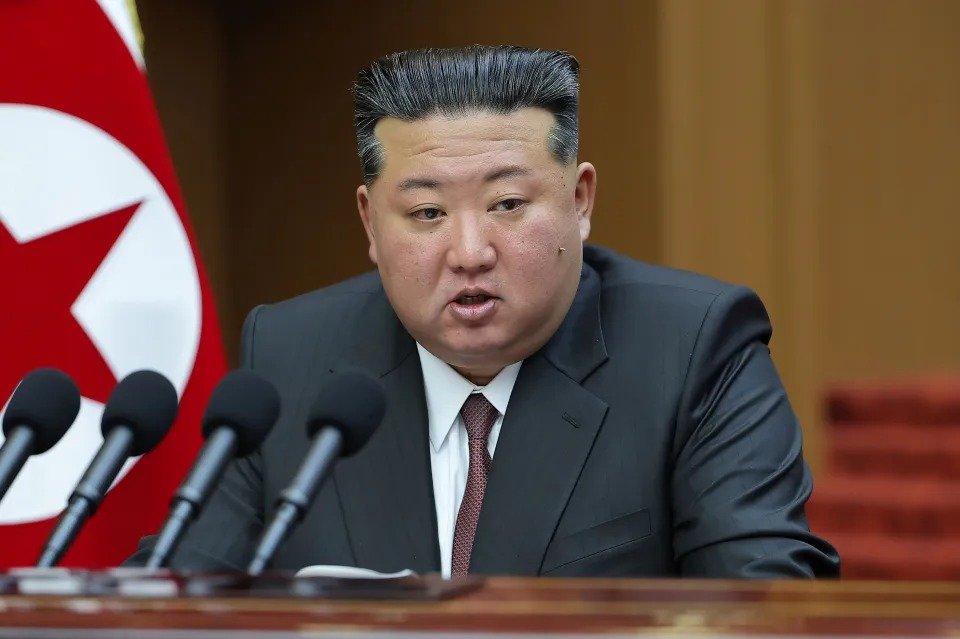
North Korea used its annual appearance at the United Nations General Assembly to firmly declare that its status as a nuclear-armed state can never be reversed under any circumstances, delivering what officials characterized as its most direct rejection yet of international calls for denuclearization. Vice Foreign Minister Kim Son Gyong, addressing the assembly during the final day of this year’s high-level debate, stated that the country’s nuclear deterrent represents an absolute and irresistible force necessary to safeguard national sovereignty, security, and peace against what Pyongyang characterizes as ongoing external threats and aggression.
Despite the firm substantive content of the message, observers noted that the speech itself was delivered in a notably measured tone compared to some previous North Korean addresses at the assembly, containing no direct threats of destabilizing actions and instead framing the country’s position primarily around lamenting what Kim described as a harsh reality of unprecedented mutual distrust and confrontation in international affairs. This relatively restrained delivery, even while conveying an uncompromising substantive position on the nuclear question, suggests a deliberate communications strategy aimed at projecting confidence and resolve without escalating rhetoric to the point of provoking immediate international alarm.
Kim specifically criticized what she characterized as collusion between Tokyo, Seoul, and Washington against Pyongyang, describing their coordinated defense activities as an increasingly offensive and aggressive military posture that has provoked North Korea and destabilized the broader Korean Peninsula. Notably, the speech made no mention of North Korea’s own role in regional tensions, including its own sporadic ballistic missile launches that have repeatedly prompted defensive responses and heightened alert postures among its regional neighbors and their American ally.
This declaration arrives against the backdrop of North Korea having formally enshrined its nuclear weapon status into domestic law in the preceding year, a legal and political step that Pyongyang has consistently cited as evidence of the permanence and non-negotiability of its nuclear program going forward. Kim explicitly referenced this legal codification during her remarks, suggesting that any international pressure toward denuclearization would effectively require North Korea to violate its own constitutional framework, a characterization designed to further reinforce the perceived permanence and legitimacy of the country’s nuclear posture.
The timing of this declaration coincides with South Korean President Lee Jae Myung’s announcement of a significant increase to his country’s defense budget, raising spending by more than eight percent to support development of next-generation weapons systems including autonomous drones and artificial intelligence-powered combat capabilities. Lee specifically emphasized that while the alliance with the United States remains a key pillar of South Korean security, his government cannot afford to entrust its fate entirely to others, reflecting a broader regional trend toward increased self-reliant defense investment amid persistent North Korean nuclear developments.
Diplomatic observers note that North Korea’s decision to send a relatively lower-ranking official, rather than leader Kim Jong Un himself, to deliver this year’s address reflects a longstanding pattern, with the North Korean leader having never personally addressed the General Assembly, likely reflecting the formal state of war that has technically persisted between North Korea and the United States for more than seven decades. This diplomatic protocol allows North Korea to maintain its traditional annual presence at the assembly while avoiding the security and political complexities that would accompany a direct visit from its top leadership to American soil.
As this year’s General Assembly session concludes its high-level debate portion, North Korea’s uncompromising position on its nuclear status adds to the broader complexity facing international efforts toward regional denuclearization and stability on the Korean Peninsula. Whether this firm public declaration forecloses any realistic prospect for renewed diplomatic engagement on the nuclear question, or simply represents an opening negotiating position within a longer-term diplomatic process, remains a question that will likely only be answered through how the broader relationship between North Korea and the international community continues developing in the months and years ahead.
