

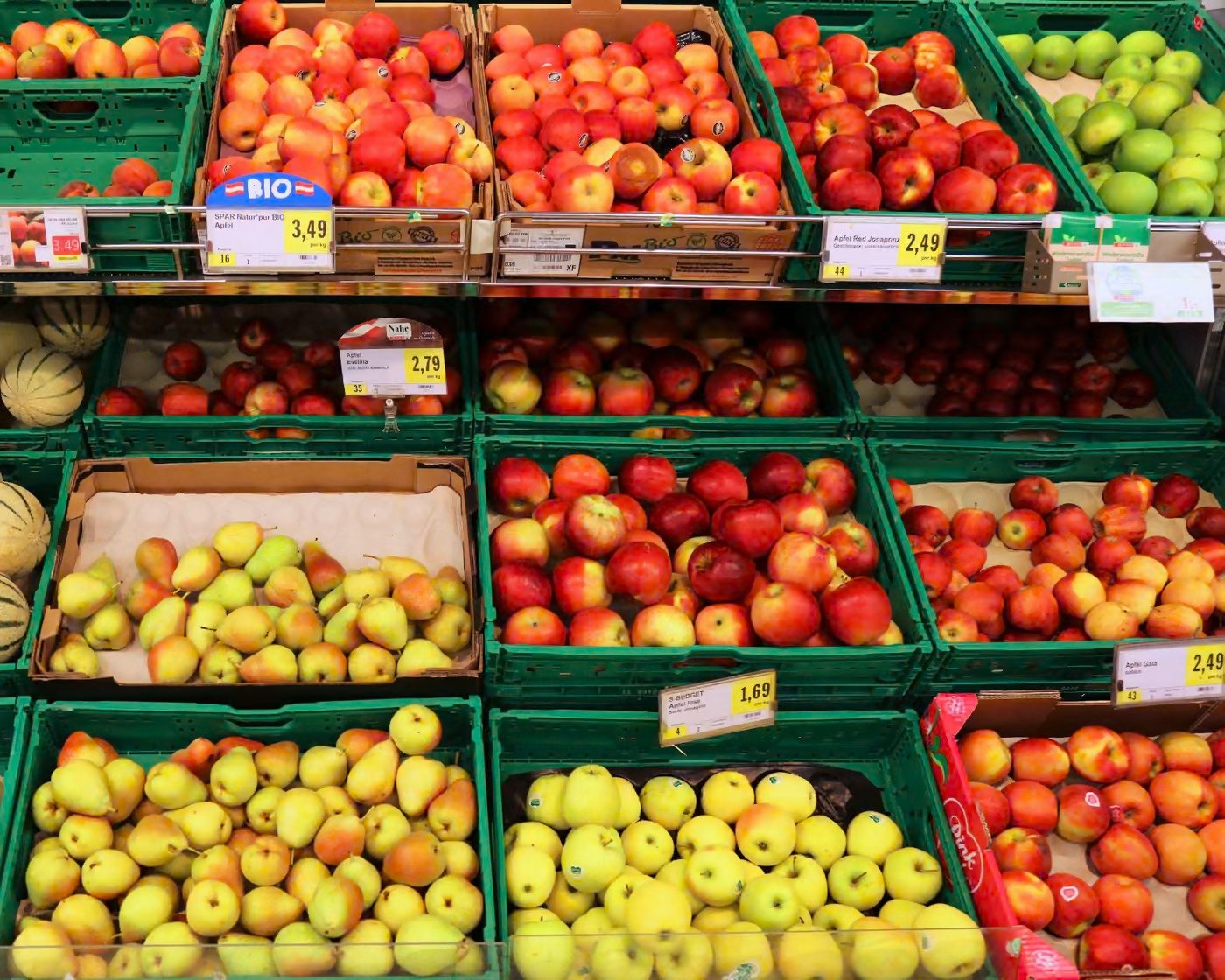
An Austrian retail trial is testing whether older apple varieties can find a place in modern supermarkets. The project reflects growing interest in food diversity and the possibility of bringing back fruit that has become less common as commercial farming has focused on varieties that are easy to grow, store and transport.
Many traditional apple varieties have distinctive flavours, textures and colours. Some may be sharper or more aromatic than the familiar fruit found in shops today. Others have qualities that suit local growing conditions. Yet they can disappear from large-scale production when growers and retailers favour varieties that deliver consistent size, appearance and shelf life.
The Austrian scheme aims to test whether forgotten varieties can meet the demands of a commercial market. A retail pilot can help show whether shoppers are willing to buy unfamiliar apples and whether supply chains can deliver them at a reliable quality. The results may also reveal what information customers need before choosing a less familiar product.
For consumers, variety can make everyday food more interesting. Different apples can suit different uses, from eating fresh to baking, cooking or making juice. Keeping a wider range of varieties in circulation may also help preserve agricultural heritage and the knowledge associated with traditional orchards.
There are practical challenges. Older varieties may not produce the same volume as commercially dominant apples, and some may be more difficult to store or transport. Farmers need a reliable market before investing time and land in crops that could otherwise be difficult to sell. Retailers, in turn, must decide whether customers will pay for products that may be less familiar.
The project also connects to wider concerns about biodiversity. Farming systems that depend on a narrow range of crops can become vulnerable to disease, pests or changing weather. Maintaining genetic diversity does not remove those risks, but it can preserve options for future growers and researchers.
The trial’s success will depend on more than nostalgia. Shoppers must enjoy the fruit, retailers need a workable supply, and growers must be able to produce it at a reasonable cost. If those conditions can be met, traditional apples may gain a new role in modern food shopping while helping protect varieties that might otherwise fade from everyday life.
