

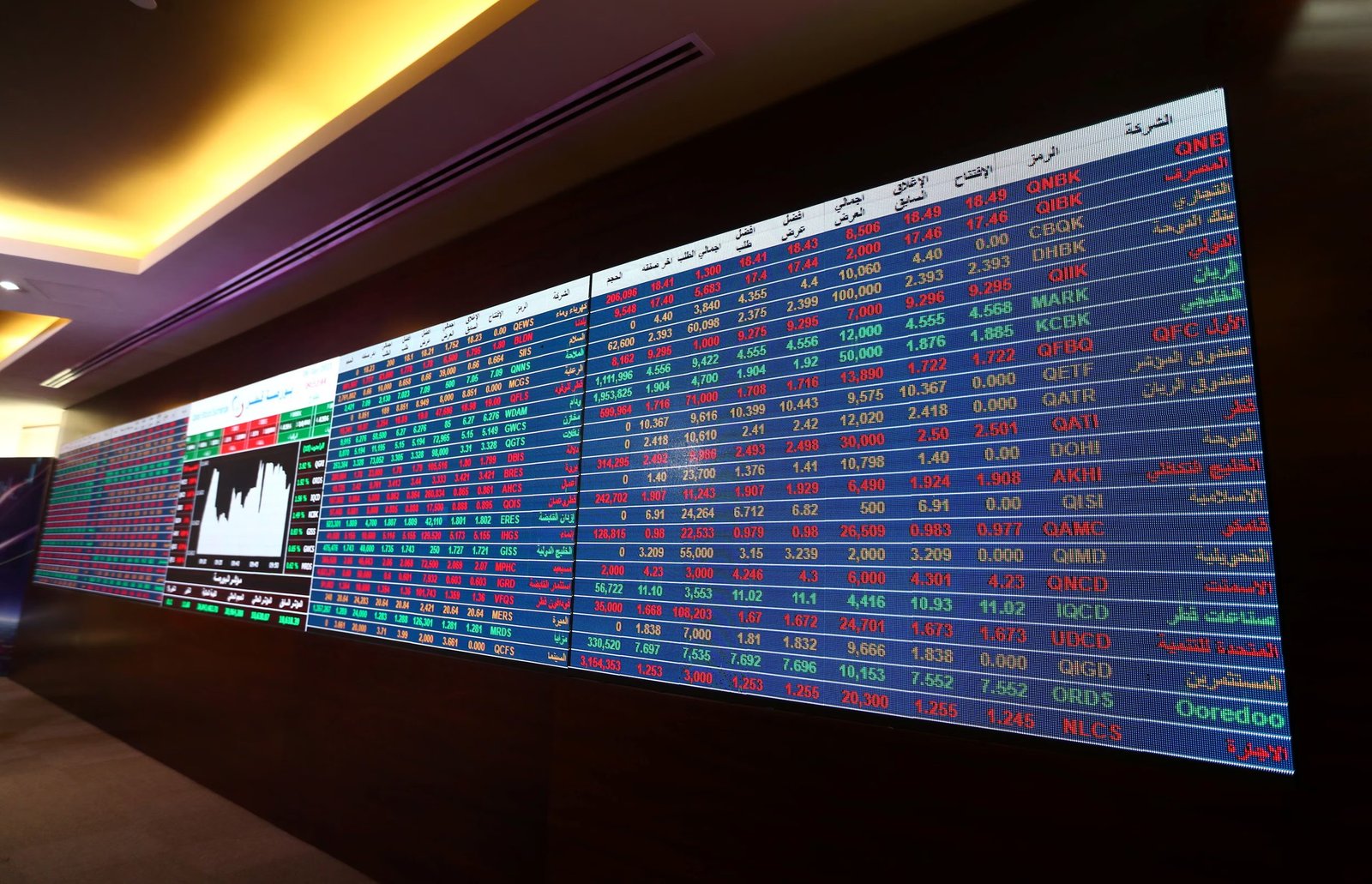
Stock markets across the Gulf were subdued on Monday as investors assessed regional security risks, movements in oil prices and uncertainty about the outlook for energy exports. The cautious trading reflected concern that tensions around important shipping routes could affect business costs and investor confidence.
Saudi Arabia’s main share index fell in early trading, while markets in Abu Dhabi and Qatar also moved lower. Dubai’s market was broadly flat. These different results show that investors were responding to regional concerns while also weighing the outlook for individual companies and local economies.
Oil remains central to the Gulf’s economic picture. Prices can affect government revenue, energy companies and the wider investment climate. Brent crude fell during the session as traders responded to developments in global supply and took profits. Even with that decline, the cost of delivering physical oil remained under pressure from shipping risks and uncertainty around the Strait of Hormuz.
The strait is one of the world’s most important energy routes. Any disruption can raise insurance costs and make ship operators more cautious. These expenses may eventually affect buyers, refiners and consumers. The possibility of an incident involving a tanker has therefore added to concern among traders across the region.
Investors are also watching plans by Gulf companies to raise capital and attract investment. In the United Arab Emirates, Dubai Investments gained as attention turned to a planned share sale involving its subsidiary DIP Holding. Such moves can offer businesses funding for expansion, although market conditions can influence the timing and cost of a public offering.
The wider question is how regional economies can maintain confidence during periods of geopolitical uncertainty. Investors look for clear policy signals, stable transport routes and predictable business conditions. If tensions persist, companies may delay projects or face higher costs even when their own operations are not directly affected.
For Gulf markets, the coming sessions will depend on a combination of energy prices, security developments and corporate news. The early declines do not by themselves prove a lasting downturn, but they show how quickly regional risks can influence financial decisions.
