

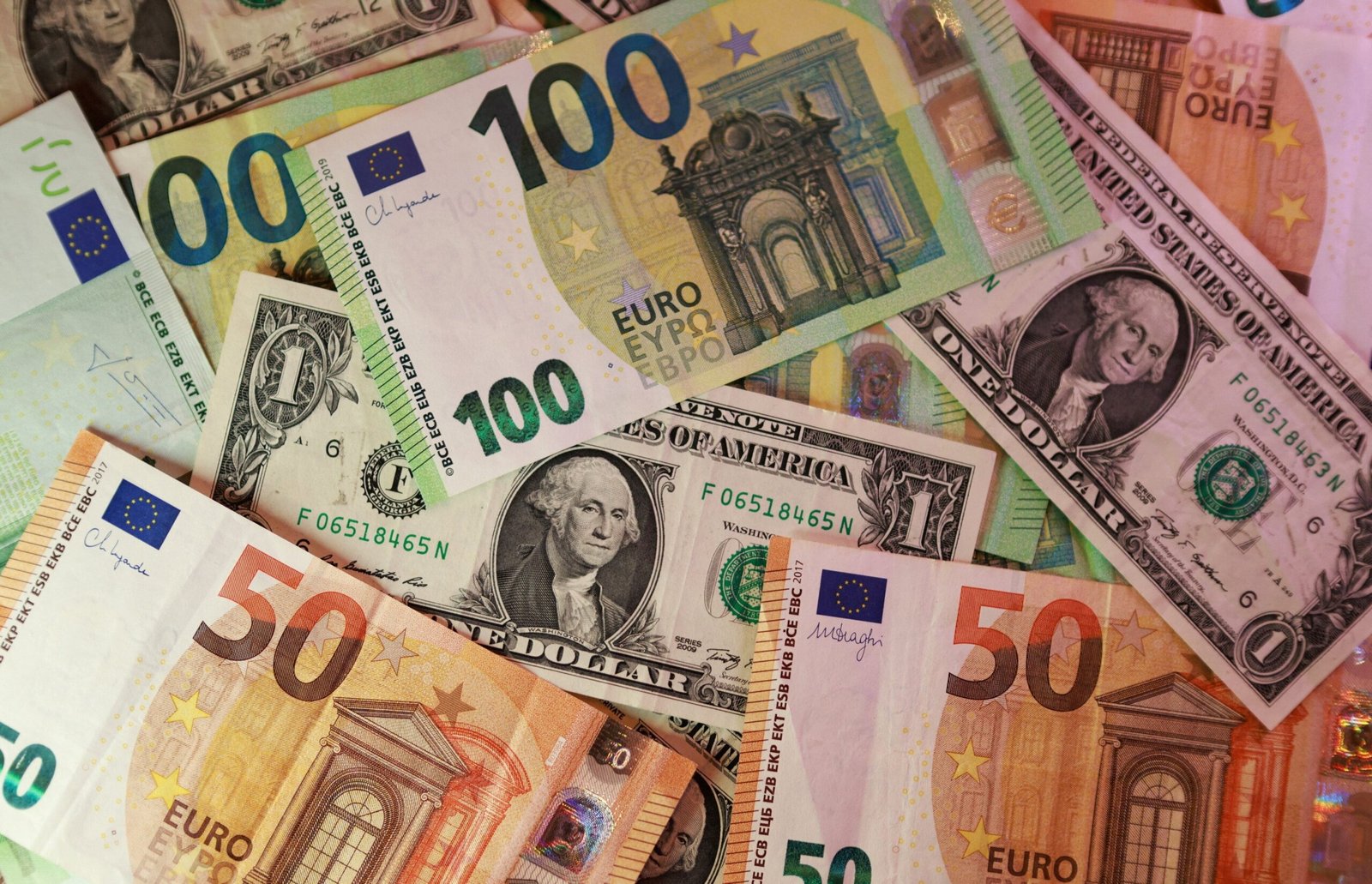
The euro fell to its lowest level in 17 months on October 5, 2026, as investors became more worried about France’s growing debt and political uncertainty. The fall placed fresh pressure on European markets and raised fears that problems in France could spread across the euro zone. The euro dropped more than 0.8% during Asian trading before recovering some ground, while investors moved toward the US dollar as concerns over French public finances increased.
France is one of Europe’s largest economies, but its government has struggled to reduce a large budget deficit. Political disagreements have also made it difficult to agree on spending cuts, adding to investor concerns. French government bonds have faced heavy selling, pushing their yields higher as investors demand greater returns to compensate for the perceived risks.
The gap between French and German bond yields is closely watched because Germany is seen as one of Europe’s safer borrowers. A wider gap means investors demand more money to hold French debt, reflecting greater concern about the country’s financial position. The gap recently reached its highest level since the European debt crisis of 2011, increasing fears that the current pressure could develop into a wider financial problem.
France is also facing political uncertainty ahead of its next presidential election. The government must find enough support for its budget plans while dealing with a divided parliament. Public spending remains a major issue because France has a large welfare system, strong public services and high government spending. Attempts to reduce those costs can quickly create protests and political opposition.
The government has already faced public anger over planned budget cuts, with education and other public services becoming part of the dispute. Investors are watching closely because France’s financial position can affect the entire euro zone. If borrowing costs rise sharply, the French government could face a much larger interest bill, leaving less money available for public spending and making it harder to respond to economic problems.
The European Central Bank is also facing a difficult situation. Inflation across the euro zone remains above its target, partly because of higher energy prices. If inflation stays high, the ECB may need to keep interest rates higher for longer, but higher rates can increase pressure on governments that already carry large amounts of debt.
The United States faces a different situation, with the dollar gaining as investors expect the Federal Reserve to keep rates steady in October. The stronger dollar has added further pressure to the euro and contributed to the currency’s decline. The market movement shows how closely politics and finance are linked, as a political dispute in France can quickly affect the value of the euro and the cost of government borrowing.
European leaders will want to prevent the situation from becoming a wider confidence crisis. France still has a large and diverse economy, and its debt problems do not mean that a financial crisis is certain. However, investors are becoming less patient and want to see a credible plan to control spending and stabilize public finances.
The October 5 market move is therefore a warning rather than a final crisis. France now faces pressure from investors, voters and political opponents, while the government must find a way to reduce its debt without causing deeper social unrest. For the euro zone, the main hope is that France can restore confidence before the current market pressure spreads to other parts of the European economy.
