

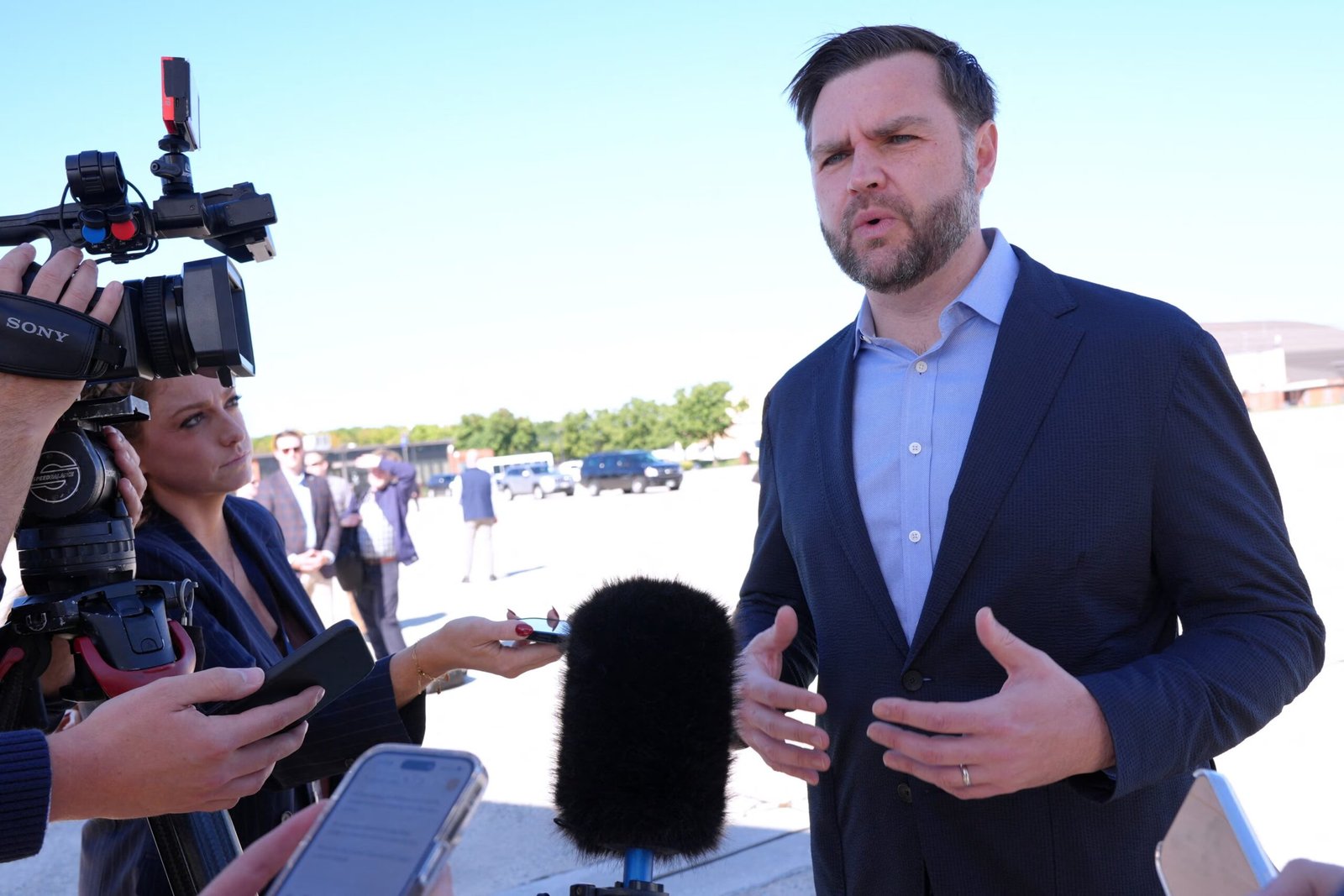
US Vice President JD Vance has taken the Republican campaign to Alaska as the party faces a closer than expected Senate race before the November midterm elections. His visit shows how important the state has become in the wider fight for control of Congress. Vance traveled to Alaska to support Republican Senator Dan Sullivan, who is seeking another term but faces Democratic challenger Mary Peltola in a race that has become more competitive than Republicans expected.
Alaska has long been seen as a safe Republican state, and former President Donald Trump won it by a large margin in 2024. However, high living costs and concerns about the economy are creating new problems for the Republican campaign. A New York Times poll conducted between September 24 and October 1 showed Peltola seven points ahead of Sullivan, although polling Alaska can be difficult because of its large rural population.
Peltola has focused her campaign on the cost of living and has argued that Sullivan is too close to Trump and political leaders from outside Alaska. The Republican campaign is trying to answer those concerns by focusing on energy. Alaska has huge oil and gas resources, and Sullivan has argued that more energy production can help reduce costs for consumers while creating jobs across the state.
Trump recently made Sullivan the public face of a $200 billion energy investment package in Alaska. The plan includes a pipeline project backed by South Korea, although Seoul has said the project will depend on commercial and legal conditions. The federal government has also announced $150 million for electrical transmission lines in Alaska, with officials saying the project could serve about three quarters of the state’s population.
Energy costs have become a major issue in the election because of Alaska’s geography and the high cost of transporting goods. Sullivan has asked Trump to consider banning diesel exports because fuel prices remain high. The price of diesel in Alaska averaged $6.60 per gallon on Sunday, according to the American Automobile Association, making fuel costs especially important for communities spread across a huge area.
Transport costs can affect food prices, heating and other basic needs, giving energy policy a direct impact on daily life. Vance has argued that Alaska is competitive because voters are concerned about these everyday problems. The Republican campaign is therefore trying to connect its plans for energy production and infrastructure with the financial pressures facing households across the state.
Trump and Vance have made the midterms a national test of their administration. They are traveling across the country to support Republican candidates and encourage voters to remain loyal to the party, while Trump has also urged supporters to treat the election as a vote on his leadership. For Republicans, the main goal is to keep control of Congress and maintain support for Trump’s policy plans during the rest of his term.
For Democrats, competitive states such as Alaska offer an opportunity to reduce Republican power in Congress. The Alaska race is also linked to the wider debate over energy and the war in the Middle East. The conflict with Iran has pushed fuel prices higher, while Russia and Ukraine continue to attack energy infrastructure, making energy a major political issue across the United States.
Voters are now judging promises about new pipelines, power lines and oil production against the cost of daily life. The October 6 campaign visit shows that even states with strong Republican traditions cannot be taken for granted. Sullivan remains a close Trump ally, while Peltola has found an opening by focusing on the rising costs facing Alaskans.
The coming weeks will show how the candidates respond to those concerns and whether the Republican campaign can maintain its support in a state that has traditionally favored the party. For now, Alaska has become one of the unexpected Senate races to watch as America moves toward the November 3 election.
