

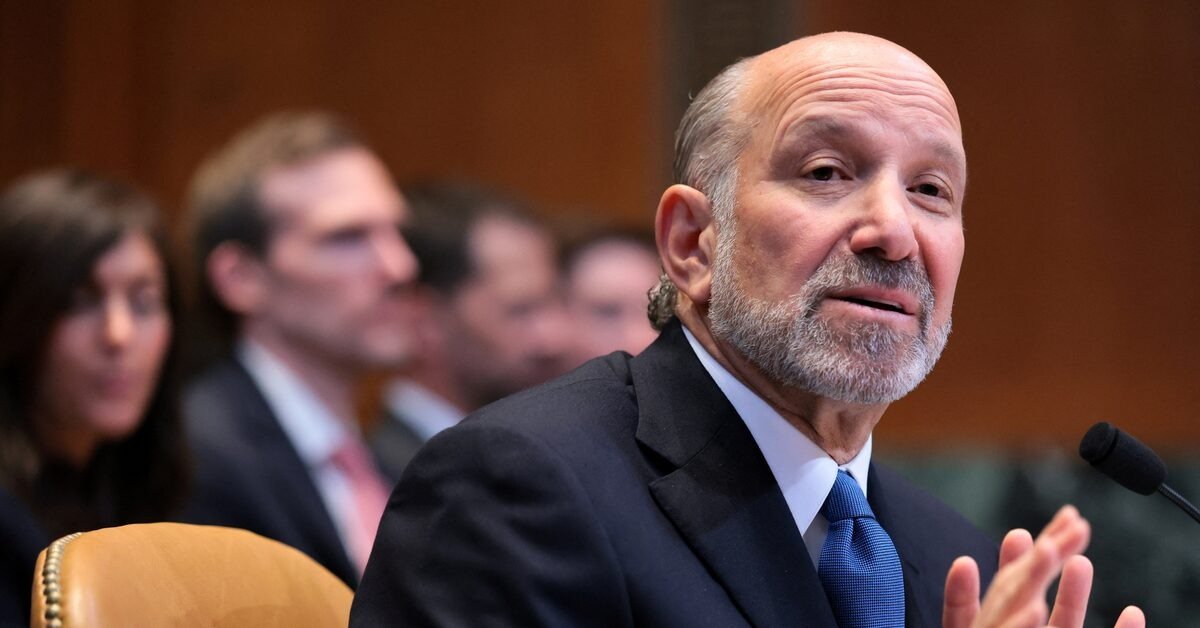
Commerce Secretary Howard Lutnick provided detailed financial confirmation this week regarding the scale of South Korea’s planned energy infrastructure investments in the United States, breaking down specific dollar figures tied to a liquefied natural gas project in Alaska alongside a substantial nuclear power construction program spanning multiple states. His remarks, delivered during a White House briefing alongside President Trump, offered the clearest accounting yet of how this major bilateral investment package will be structured across its various components.
According to Lutnick, South Korea’s commitment includes just over fifty billion dollars directed specifically toward the long-planned Alaska liquefied natural gas project, an ambitious pipeline initiative designed to transport natural gas from Alaska’s North Slope to southern export facilities for shipment to international markets. This figure represents one of the largest single foreign investment commitments toward the project since its original conception, following years during which major energy companies had stepped away from the initiative over commercial viability concerns.
Beyond the Alaska commitment, Lutnick detailed an even larger allocation of one hundred twenty billion dollars dedicated to constructing eight large-scale nuclear power facilities across the United States, naming Ohio, Tennessee, South Carolina, and Kentucky as specific locations that will host these new reactors. This nuclear investment component represents a particularly significant commitment given the substantial capital costs and extended construction timelines typically associated with nuclear power facility development.
These energy-focused investments build directly upon an earlier announced commitment of twenty-two point three billion dollars toward a gas-fired power plant in Encinal, Texas, which Lutnick confirmed as the first formally finalized project under South Korea’s broader investment pledge. Taken together, these three major energy projects represent a substantial portion of the overall investment package that emerged from last year’s bilateral trade negotiations between the two countries.
The broader context for these commitments traces back to an agreement under which South Korea pledged a combined three hundred fifty billion dollars in American investment, split between one hundred fifty billion dollars directed toward shipbuilding sector support and the remainder allocated toward various strategic investment priorities. In exchange for these substantial commitments, South Korea secured more favorable tariff treatment for its exports entering the American market, a key priority for Seoul given the significant trade volume between the two economies.
Industry analysts note that successfully executing investments of this scale and complexity typically requires extended timelines spanning many years, given the substantial engineering, regulatory, and construction challenges inherent to major energy infrastructure projects, particularly those involving nuclear power generation. The specific financial commitments detailed by Lutnick represent an important milestone in formalizing these plans, though actual construction progress will likely unfold gradually over an extended period.
As these detailed financial figures become public, both American and South Korean officials appear focused on emphasizing the substantial scale of this economic partnership, even as questions remain about the precise implementation timeline and the extent to which South Korea’s government has fully finalized its commitment to every individual project component, particularly regarding the Alaska pipeline’s continued viability review.
