

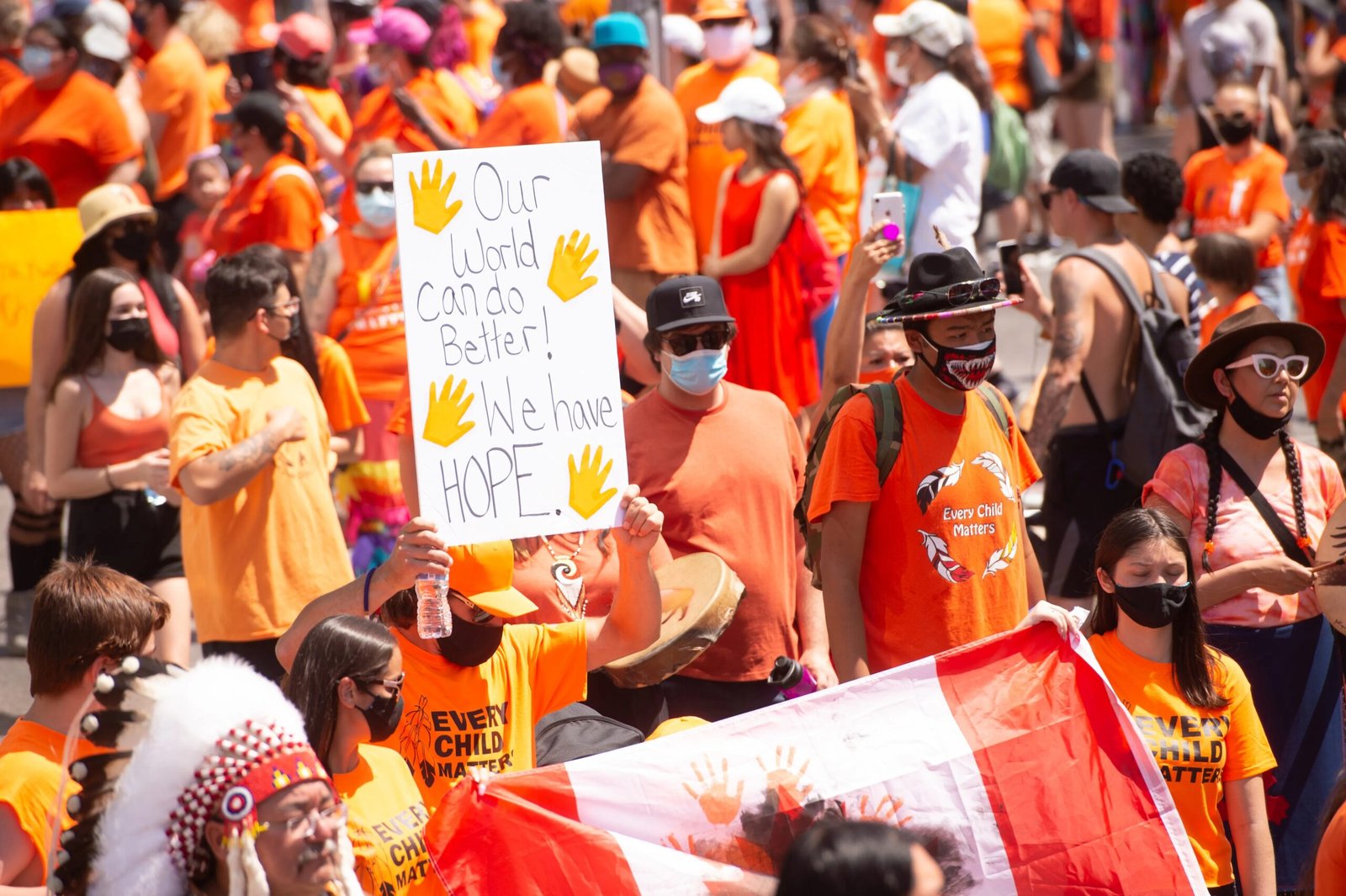
Communities across Canada have embraced the wearing of orange shirts this week as part of a now well-established tradition that has grown from its origins as a grassroots movement into a widely recognized symbol of solidarity with residential school survivors and their families. The practice traces its roots to the personal story of a woman whose orange shirt was taken from her on her first day at a residential school decades ago, a story that has since become a powerful and accessible symbol helping communities across the country engage with this difficult chapter of Canadian history.
Schools throughout Canada have incorporated Orange Shirt Day observances into their educational programming, using the visually striking and easily understood symbolism of the orange shirt as an accessible entry point for discussing more complex historical and ongoing issues related to the residential school system and its lasting impact on Indigenous communities. This educational approach has proven particularly effective for engaging younger students, providing a tangible and relatable starting point for discussions about historical topics that might otherwise feel abstract or difficult for children to fully grasp.
Businesses and workplaces across the country have also embraced the tradition, with many organizations encouraging employees to wear orange shirts as a visible expression of solidarity and organizing internal educational programming to mark the occasion. This workplace participation reflects how the observance has expanded well beyond its original grassroots and educational contexts to become a broader societal expression of acknowledgment and solidarity that extends across numerous different sectors of Canadian public life.
Indigenous artists and designers have created numerous variations of orange shirts specifically for this observance, often incorporating traditional Indigenous artwork and symbolism alongside the basic orange color that has become central to the movement. These artistic collaborations have helped ensure that Indigenous voices and perspectives remain centrally featured within the broader observance, rather than allowing the symbolism to become disconnected from its origins within Indigenous community experience and storytelling traditions.
Community events marking the occasion have ranged from formal ceremonies and educational presentations to more informal gatherings where community members can share stories, reflect on reconciliation efforts, and build connections across different community groups. This variety of observance formats reflects the broad reach the movement has achieved, allowing communities of different sizes and with different existing relationships to Indigenous history and reconciliation efforts to find appropriate ways to participate meaningfully in the broader observance.
Retailers offering orange shirts specifically designed for this observance have increasingly worked to ensure that proceeds from these sales genuinely benefit Indigenous communities and organizations, responding to earlier criticism that some commercial orange shirt sales had not adequately ensured Indigenous communities benefited from the commercial activity associated with the symbol. This evolution reflects broader ongoing conversations about ensuring reconciliation-related commercial activity genuinely supports rather than simply appropriates Indigenous cultural symbols and stories.
As this week’s observances continue across Canada, the widespread adoption of orange shirt wearing illustrates how a personal story and simple visual symbol can grow into a powerful nationwide movement for awareness and solidarity. Whether through educational programming, workplace participation, or community gatherings, this year’s observance continues building on the movement’s established role in helping Canadians engage meaningfully with this difficult but essential aspect of the country’s shared history and ongoing reconciliation journey.
