

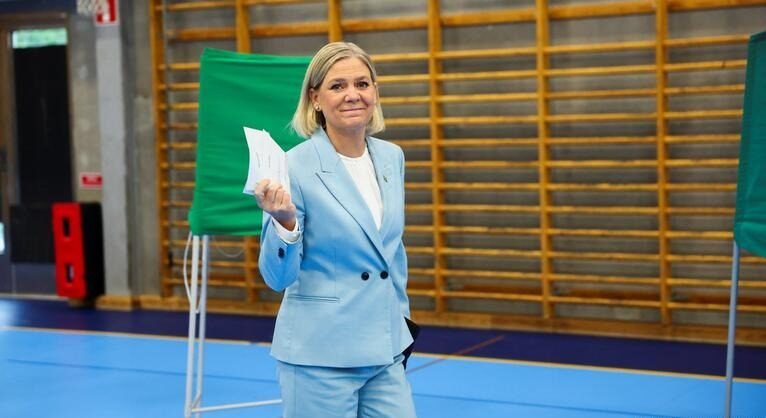
Early results show Swedens left wing election lead remains extremely narrow following Sunday’s general election, with four opposition parties led by Social Democratic leader Magdalena Andersson holding just a one seat majority over incumbent Prime Minister Ulf Kristersson’s governing alliance.
With nearly ninety percent of votes counted, the razor thin margin reflects an exceptionally close contest that left the outcome too close to call well into election night, with both the incumbent prime minister and opposition leader expressing readiness to form the next government.
Notably, the far right Sweden Democrats party, a key member of Kristersson’s governing coalition, appeared to lose ground compared to previous elections, marking a potentially significant shift in a political landscape that had seen the party’s influence grow substantially in recent years.
This election result carries significant implications for Swedish policy direction across various domains, including immigration policy, economic management, and the country’s continued approach to European Union relations and broader international diplomatic engagement throughout the region.
Andersson’s Social Democrats have positioned themselves as offering an alternative economic and social policy direction compared to Kristersson’s coalition, with campaign messaging focused on addressing cost of living concerns and various domestic policy priorities important to Swedish voters.
The exceptionally close nature of this contest reflects broader political fragmentation trends observed across various European democracies, where traditional two party or two bloc political systems increasingly face challenges from more fragmented multiparty competitive landscapes.
Coalition formation negotiations will likely prove complex given the narrow margins involved, with smaller parties potentially playing decisive roles in determining which broader coalition ultimately succeeds in assembling a stable governing majority within the 349 seat parliament.
International observers have watched this election closely, given Sweden’s significant role within European Union policy discussions and broader Nordic regional cooperation frameworks that could be influenced by any shift in the country’s governing coalition and associated policy priorities.
The apparent decline in far right support, if confirmed in final results, would represent a notable departure from broader European political trends that have generally shown continued far right electoral momentum in various other countries throughout the continent in recent election cycles.
Swedish electoral officials have indicated that final, certified results will be finalized over the coming days, following standard post election vote counting and certification procedures that will provide definitive clarity regarding the exact composition of the next parliament.
As Sweden awaits final confirmed results, both major political blocs continue preparing for potential government formation. This remarkably close election outcome underscores the genuine competitiveness of Swedish democracy and the significant policy stakes riding on the final certified results.
