

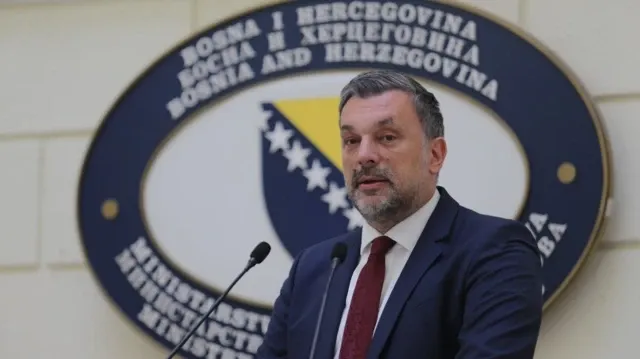
Bosnia and Herzegovina announced that it will Bosnia cuts communication Serbia relations to their lowest possible level, recalling embassy staff and suspending bilateral meetings in response to what officials describe as the glorification of convicted war criminal Ratko Mladic.
The diplomatic downgrade represents a significant escalation in tensions between the two Balkan neighbors, whose relationship has remained complicated in the decades following the brutal conflicts that accompanied the breakup of the former Yugoslavia during the 1990s.
Mladic, a former Bosnian Serb military commander, was convicted of genocide and crimes against humanity by an international tribunal for his role in wartime atrocities, including the Srebrenica massacre, which remains one of the most significant war crimes prosecutions stemming from the Balkan conflicts.
Bosnian officials have not detailed the specific recent incidents prompting this diplomatic response, though the decision suggests particular public commemorations or statements within Serbia that Bosnian authorities interpreted as inappropriately honoring or defending Mladic despite his war crimes convictions.
This diplomatic rupture adds to longstanding tensions between the two countries, which have periodically flared over historical grievances connected to the wartime period, reflecting how deeply the conflicts of the 1990s continue shaping contemporary political relationships in the Balkan region.
Regional stability concerns have accompanied this latest diplomatic downgrade, given the Balkans’ history of ethnic and political tensions that international observers continue monitoring closely, particularly regarding any developments that might destabilize the fragile peace established following the wartime conflicts.
International organizations involved in Balkan peace and reconciliation efforts have expressed concern about this diplomatic escalation, emphasizing the importance of continued dialogue between neighboring countries despite deep historical grievances stemming from the wartime period decades ago.
Bosnian Serb political leaders, representing the ethnic Serb population within Bosnia’s complex political structure, have generally maintained closer ties with Serbia, creating additional complexity for how this diplomatic downgrade affects Bosnia’s own internal political dynamics.
European Union officials, given both countries’ aspirations toward eventual EU membership, have historically encouraged reconciliation efforts between Balkan neighbors, making this latest diplomatic escalation a potential complication for both nations’ broader European integration ambitions.
Historical memory and commemoration of wartime atrocities remain deeply sensitive topics throughout the Balkan region, with ongoing disputes over how various communities memorialize or discuss the conflicts continuing to periodically strain relationships between neighboring countries decades after fighting ended.
As this diplomatic downgrade takes effect, regional observers will be watching closely for how both governments navigate the reduced relationship going forward. Whether this latest tension eventually eases through renewed diplomatic engagement or represents a more lasting rupture remains uncertain in the immediate aftermath of this announcement.
