

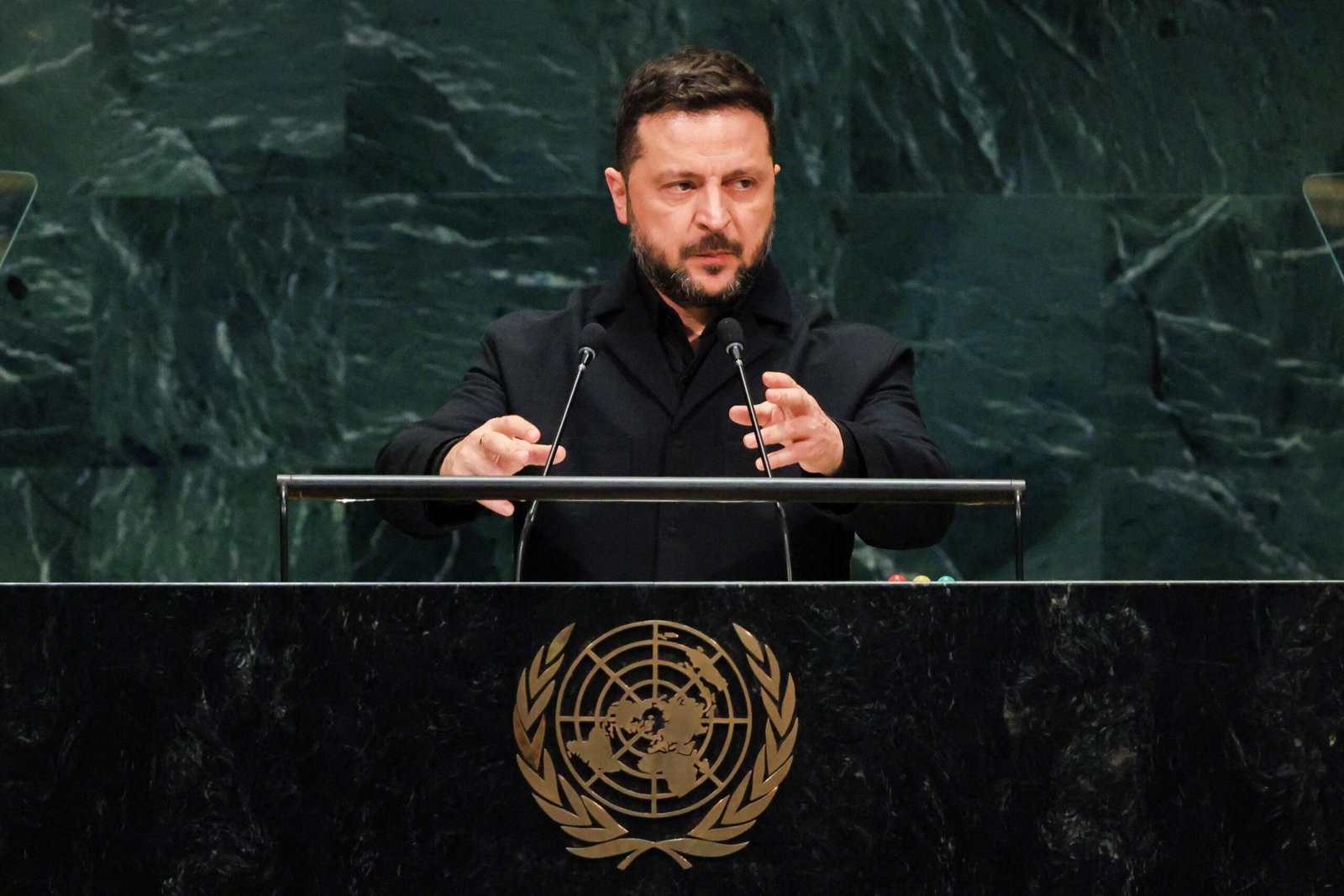
Ukrainian President Volodymyr Zelensky delivered a pointed address to the United Nations General Assembly yesterday, describing Russian President Vladimir Putin as the “patient zero” responsible for originating the ongoing war that has devastated Ukraine for years. The characterization, striking in its directness, reflected Zelensky’s continued effort to frame the conflict clearly for an international audience even as diplomatic fatigue around the prolonged war has grown in some quarters of the global community over the extended duration of the fighting.
In his remarks, Zelensky stressed the continued importance of negotiations as a path toward eventually ending the conflict, even while emphasizing that Ukrainian forces remain committed to continuing their fight against Russian aggression for as long as necessary. This dual message, expressing openness to diplomatic solutions while simultaneously reaffirming military resolve, has characterized much of Zelensky’s public messaging throughout the war, reflecting the delicate balance he has attempted to strike between pursuing peace and maintaining the resources and international support necessary to continue resisting Russian advances.
The address came during a particularly active stretch of diplomatic engagement for the Ukrainian leader, who also held separate meetings with both the American and British prime ministers on the sidelines of the broader General Assembly gathering. During his private discussion with the American president, the two reportedly spent approximately forty minutes discussing efforts to end the invasion, with particular attention paid to Ukraine’s expanding campaign of long-range strikes against Russian oil refineries and energy infrastructure that has intensified significantly in recent weeks.
Separately, Britain’s prime minister reportedly told Zelensky during their own private meeting that Ukraine’s allies must maintain existing sanctions against Russia in order to sustain pressure on Moscow and help eventually bring the war to a conclusion. This message arrived just as questions emerged about a European Union decision to remove two prominent Russian businessmen from its sanctions list, with British officials publicly expressing opposition to that delisting and calling instead for continued, sustained economic pressure on Russia through existing sanctions frameworks.
Zelensky’s comments about a possible energy truce also drew significant attention, as he indicated Ukraine remained ready to pursue a bilateral ceasefire specifically covering energy infrastructure targets, even while warning that Russia appeared to be planning what he described as a new massive attack against his country. This warning underscored the persistent volatility of the situation on the ground, where diplomatic conversations about potential de-escalation continue occurring alongside ongoing and often intensifying military operations affecting civilian infrastructure and populations.
The broader war has continued generating devastating human and material costs throughout this extended period of conflict. Recent reports indicate that combat losses among Russian forces have now reached approximately one and a half million personnel since the war’s beginning years earlier, according to Ukrainian military tracking, figures that, while difficult to independently verify with complete certainty, nonetheless illustrate the immense scale of casualties this conflict has produced across an extended and grinding military campaign.
As diplomatic activity continues throughout this consequential week at the United Nations, the underlying question of how and when this devastating conflict might eventually reach some form of resolution remains as unresolved as ever. Zelensky’s pointed rhetoric, combined with continued high-level diplomatic engagement from multiple allied nations, suggests that finding a path toward lasting peace will likely require sustained international pressure and continued military and economic support extending well beyond any single week of diplomatic conversation, however significant that conversation might prove to be.
