

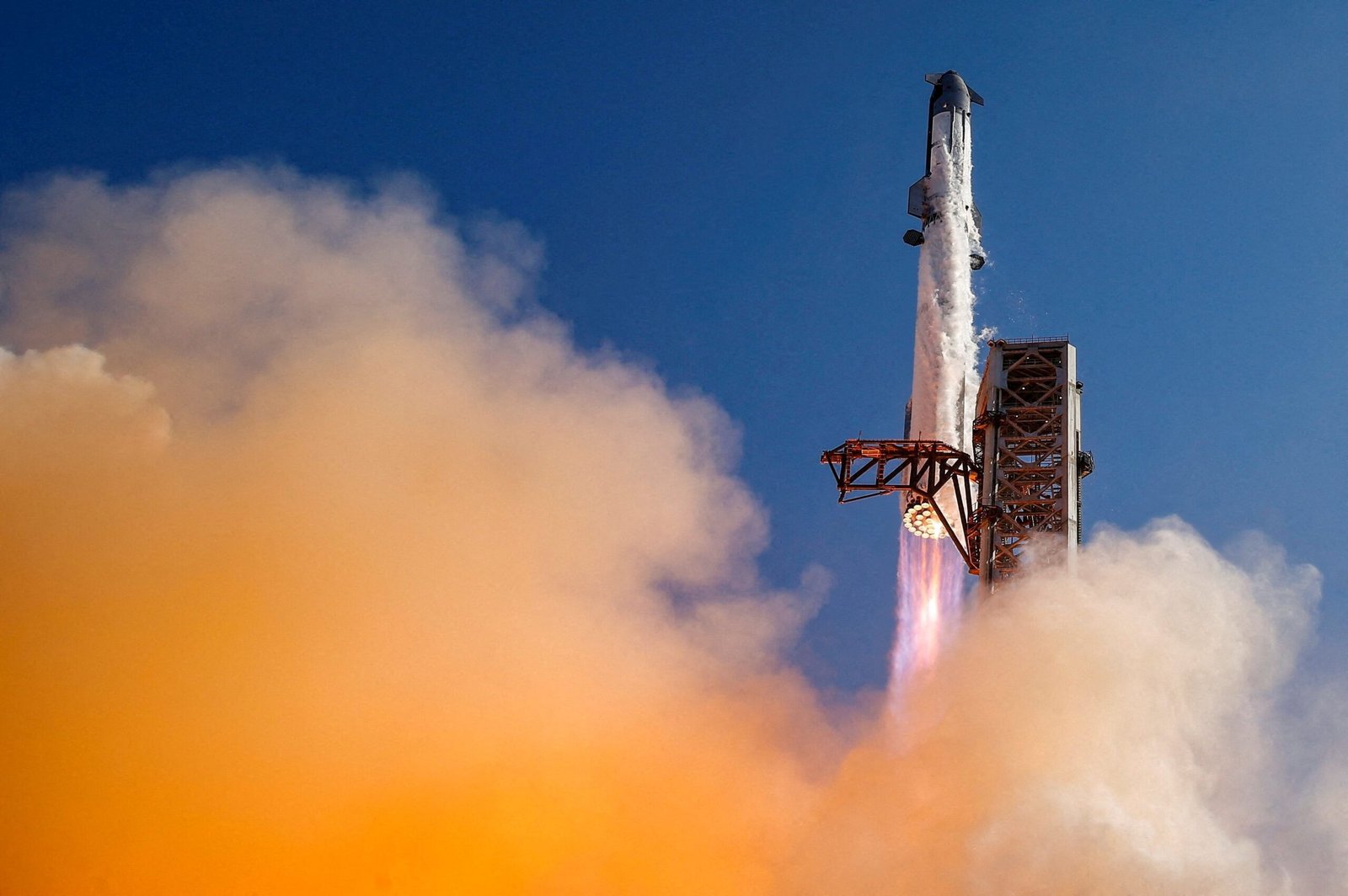
SpaceX is attempting a major milestone today with its Starship rocket program. The company’s fourteenth test flight is scheduled to place the massive rocket’s upper stage into Earth orbit for the first time. Previous test flights have reached space but never achieved a stable orbit around the planet.
The mission aims to send the Starship spacecraft to an altitude of roughly two hundred seventy-five kilometers above Earth. If successful, the spacecraft will complete approximately six orbits before beginning its return to Earth. The mission is expected to last about ten hours from launch to splashdown.
This test flight also includes an important commercial milestone for the company. SpaceX plans to deploy the first batch of its newest generation of internet satellites during the mission. Successfully delivering these satellites into orbit would mark the first time this specific Starship flight has directly generated revenue for the company’s launch division.
The rocket’s massive booster stage will separate from the upper spacecraft shortly after launch, following the same general pattern used in previous test flights. Unlike some earlier missions, the company does not plan to attempt catching either the booster or the spacecraft during this flight. Engineers are instead focused on successfully reaching a stable orbit for the first time.
Following separation, the booster is expected to attempt a controlled splashdown in the Gulf of Mexico. The upper stage spacecraft, meanwhile, will continue orbiting before performing a controlled descent into the Pacific Ocean near the coast of South America. Recovery teams will be stationed nearby to monitor the splashdown and gather data from the mission.
Previous test flights have experienced a mix of successes and setbacks throughout the program’s development. Engineers have made numerous design adjustments based on lessons learned from earlier missions. This flight represents a significant step forward in demonstrating the vehicle’s reliability for future missions.
Achieving a stable orbit is considered a critical milestone for the broader goals of the Starship program. The company envisions the massive, reusable rocket eventually replacing many of its existing launch vehicles. Its fully reusable design is intended to significantly reduce the cost of sending large payloads into space.
Starship also plays a central role in future space exploration plans beyond Earth orbit. The spacecraft is being developed as part of a broader program aimed at returning astronauts to the lunar surface. Successfully reaching orbit represents an important step toward eventually supporting these more ambitious missions.
Engineers and mission planners have spent recent weeks completing extensive pre-flight testing ahead of today’s launch attempt. Both the booster and spacecraft completed major engine tests in the weeks leading up to the mission. These tests are designed to reduce the risk of technical issues during the actual flight.
The launch remains subject to final regulatory approval before liftoff can proceed. Weather conditions and technical readiness will also play a role in determining whether the mission proceeds as scheduled. Delays are not uncommon for missions of this scale and complexity.
As the launch window approaches, engineers and space enthusiasts around the world are closely watching for updates. A successful orbital flight would mark a significant achievement in the ongoing development of the Starship program. Regardless of the outcome, today’s attempt represents another important step in the rocket’s long and closely watched development history.
