

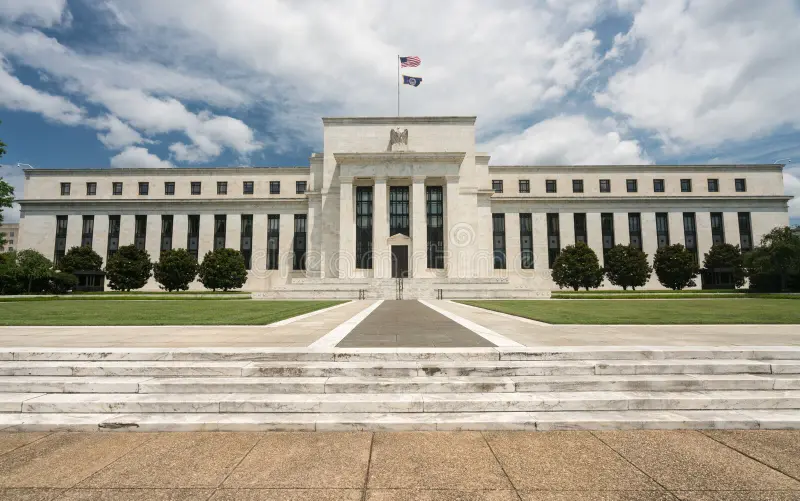
Financial markets saw Fed rate hike odds surge dramatically following Friday’s employment report, which showed the American economy adding 162,000 jobs in August, more than triple the modest gain economists had widely expected heading into the release.
Interest rate futures markets shifted meaningfully in response to the surprisingly strong data, with traders now pricing in a considerably higher probability that the Federal Reserve will raise rates at its upcoming policy meeting rather than pursuing the rate cuts many had anticipated earlier this year.
The stronger than expected hiring figures reinforced messaging from Federal Reserve officials who have consistently characterized the labor market as fundamentally healthy, providing policymakers with additional justification for maintaining a more cautious approach toward loosening monetary policy in the near term.
Bond markets reacted swiftly to the report, with Treasury yields climbing across multiple maturities as investors adjusted their expectations for the path of interest rates over the coming months. Rising yields typically reflect growing anticipation of tighter monetary conditions ahead.
Stock market reaction proved more nuanced than the straightforward bond market response, with certain sectors particularly sensitive to interest rate changes facing pressure, while other segments of the market found support from the underlying signal of continued economic strength reflected in the employment data.
Market strategists noted that stronger payroll growth combined with persistent inflation concerns, partly driven by substantial ongoing investment in artificial intelligence infrastructure, creates a challenging environment for the Federal Reserve as it attempts to balance competing economic priorities.
Currency markets also responded to the shifting rate expectations, with the US dollar strengthening against several major currencies as traders priced in the increased likelihood of higher American interest rates relative to monetary policy paths anticipated in other major economies.
Small capitalization stocks, which typically face higher borrowing costs than larger companies, showed particular sensitivity to the shifting rate outlook, given their generally greater reliance on debt financing compared to larger, more established corporations with stronger balance sheets.
Consumer facing sectors that had underperformed for much of the year found some support from the stronger employment data, as robust job growth typically translates into more resilient consumer spending patterns that benefit companies across retail, restaurant, and service oriented industries.
Analysts caution that a single employment report, however strong, represents just one data point among several the Federal Reserve will consider before its upcoming policy meeting. Upcoming inflation figures are expected to carry similarly significant weight in shaping the central bank’s ultimate decision.
As markets continue digesting this stronger than expected employment data, all attention now turns toward additional economic releases scheduled before the Federal Reserve’s meeting later this month. This latest report has clearly shifted the balance of expectations, though the central bank’s final decision remains to be determined based on the complete picture of incoming economic data.
