

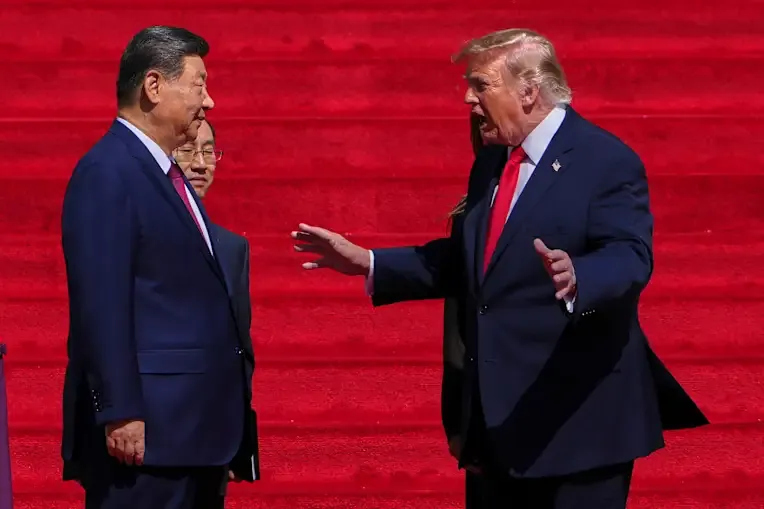
The United States plans to propose an emergency communication channel with China to deal with serious problems linked to artificial intelligence. The idea was discussed by US Treasury Secretary Scott Bessent and reported on October 4 as Washington and Beijing seek ways to manage growing technology risks.
The proposed system would give the two countries a direct way to contact each other if a major AI incident takes place. Such an incident could involve a powerful AI system causing damage to critical infrastructure, spreading dangerous information or behaving in a way that governments cannot control.
AI has become one of the most important areas of competition between the United States and China. Both countries want to lead in advanced technology. They are investing heavily in computer chips, data centers, software and AI models.
At the same time, officials in both countries are becoming more aware of the risks. Powerful AI systems can be used for useful work, but they can also create security problems. Governments worry about cyber attacks, false information and the use of AI in military systems.
Bessent said China may have underestimated how powerful some of its open source AI models have become. Open source systems can be copied, changed and used by people in many countries. This makes them difficult to control once they are widely available.
China has its own concerns about AI. Officials worry that the technology could make it harder for the government to control information. AI can create and spread content at a speed that is difficult for traditional systems to manage.
The US is also facing public concern. Many Americans want stronger rules to make AI companies responsible for harmful results. At the same time, the Trump administration has argued that too much regulation could slow innovation and allow China to gain an advantage.
The proposed communication channel would not solve those wider differences. It would simply create a way for officials to talk quickly during an emergency.
That idea is similar to other communication systems used by major powers during periods of military tension. Direct contact can reduce the risk of misunderstanding when both sides have powerful technology.
AI is now moving into areas that were once controlled almost entirely by humans. It is being used in finance, transport, medicine, defense and communications. A serious failure in one system could affect many other systems.
The US and China also have different views about technology policy. Washington has placed restrictions on some advanced computer chips and equipment sold to China. Beijing has responded with its own technology policies and efforts to build a stronger domestic supply chain.
Despite those disputes, officials from both sides have continued to discuss AI safety. That suggests that competition does not have to end all cooperation.
The proposed emergency channel is still only an idea. China would need to agree to the system, and both countries would have to decide how it should work.
The plan shows that AI is no longer only a business issue. It is now part of national security and diplomacy.
As AI systems become more powerful, the ability of governments to communicate during a crisis may become just as important as the technology itself. For Washington and Beijing, the proposed channel could provide a small but useful bridge in an increasingly competitive relationship.
